
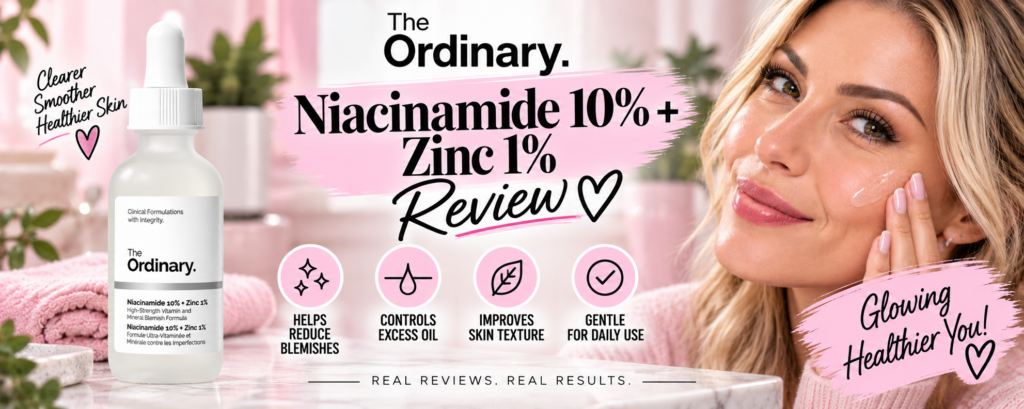
The Ordinary Niacinamide 10% + Zinc 1% Review
High-strength niacinamide serum aimed at visible shine and congestion.
Price and availability may change. As an Amazon Associate, we may earn from qualifying purchases.
Quick Verdict
A strong, inexpensive serum for oily and congested skin. The Ordinary Niacinamide 10% + Zinc 1% is a water-based serum aimed at shine, the look of enlarged pores and blemish-prone skin. It is one of the best-value actives on the market, but 10% is a high concentration and sensitive skin should introduce it slowly.
If one product is responsible for making “niacinamide” a household word, it is this one. It is cheap, the label tells you exactly what is in it, and it targets the concerns that frustrate oily skin the most. The question is whether a high-strength formula is right for you, or whether a gentler dose would serve you better.
This review is built from The Ordinary’s published information and retailer listings. We have not tested it hands-on and we flag opinion clearly.
Product Overview
The Ordinary Niacinamide 10% + Zinc 1% is a light, slightly viscous serum in a 30 ml dropper bottle. Niacinamide is a form of vitamin B3 widely used to help with the look of oiliness, uneven tone and pore visibility. Zinc PCA is included for its association with sebum balance. The Ordinary is known for single-focus formulas with honest names, and this one is exactly what it says on the bottle.
Key Features
- 10% niacinamide (vitamin B3)
- 1% zinc PCA
- Water-based serum texture
- 30 ml dropper bottle
- Short, transparent ingredient list
- Used morning and/or evening
What It Is Designed For
It is designed for skin that gets shiny, congested or blemish-prone. People typically use it to make pores look less obvious, to keep midday shine down and to support a calmer, more even-looking complexion. It is applied after cleansing and before heavier creams.
A Note on Strength
Ten percent is higher than many niacinamide products, which often sit between 2% and 5%. Higher is not automatically better: some people find 10% causes redness or a stinging sensation, especially on dry or reactive skin. If that happens, use it every other day, apply a smaller amount, or choose a lower-strength product. The Ordinary’s own regimen guidance also suggests keeping it separate from pure vitamin C in the same routine.
Pros & Cons
Pros
- Exceptional value for the concentration
- Targets shine and congestion directly
- Transparent, minimal formulation
- Easy to slot into most routines
Cons
- 10% can irritate sensitive or dry skin
- May pill under some moisturisers and makeup
- Not hydrating enough to replace a moisturiser
- Results build gradually rather than overnight
Who Should Buy It?
Buy The Ordinary Niacinamide 10% + Zinc 1% if your skin is oily, combination or congested, and if shine and visible pores are your main frustrations. It is also a sensible first active for anyone on a budget who wants to try a targeted serum without committing much money.
Who Should Skip It?
If your skin is very dry, easily flushed or already stretched by several actives, start elsewhere or introduce this very slowly. If hydration is what you need, a humectant serum such as The Ordinary Hyaluronic Acid 2% + B5 is a gentler first step.
Price and Value
The Ordinary built its reputation on low prices, and this is one of its best examples. We do not publish exact figures because they change; the button on this page opens the current listing. A 30 ml bottle used once a day lasts weeks, which makes the cost per use very low.
How to Introduce It
Because 10% is a strong dose, the way you start matters. Begin with a few drops once a day, ideally in the evening, on clean, dry skin. Let it absorb for a minute before moisturiser. If your skin is comfortable after a week, you can move to twice daily if you want to. If you notice redness, itching or a warm, flushed feeling, drop back to every other day or stop.
Introduce it on its own. If you start niacinamide in the same week as a new retinoid or exfoliant, you will not know which product is responsible for any reaction. Two weeks of a single change is a good rule for any active.
What Results to Expect, and When
Niacinamide is not an overnight product. Some people notice less shine within a couple of weeks; changes to how pores and tone look usually take longer and depend heavily on the individual. Photographs taken in the same light a month apart are more reliable than day-to-day impressions in the mirror. If you see no change after two to three months of consistent use, it is reasonable to conclude it is not the right active for your skin.
Common Mistakes
The most common mistake is using too much: a whole dropper is more than most faces need and leads to pilling. The second is layering it with too many other actives straight away. The third is skipping moisturiser because the serum feels “enough” — niacinamide is not a hydrator, and oily skin still benefits from a light moisturiser on top.
Niacinamide vs Salicylic Acid: Which Do You Need?
People with oily, congested skin often ask whether they should use niacinamide or salicylic acid (BHA). They do different jobs. Salicylic acid is an oil-soluble exfoliant that works inside the pore, loosening the build-up behind blackheads and clogged pores. Niacinamide is not an exfoliant; it is associated with managing the look of shine, redness and uneven tone.
If blackheads and bumpy texture are your main concern, a BHA such as Paula’s Choice 2% BHA Liquid Exfoliant is the more direct tool. If shine and a generally uneven, slightly red complexion bother you more, The Ordinary Niacinamide 10% + Zinc 1% is the better starting point. Many routines use both — BHA a few evenings a week, niacinamide on the others — but start with one and add the second only once your skin has settled.
Who Gets the Most From It
The Ordinary Niacinamide 10% + Zinc 1% tends to suit resilient, oily and combination skin best — skin that handles a strong active without complaint and struggles mainly with shine and congestion. If your skin is dry or sensitive, the strength that makes it effective for oily skin can be a drawback, and a lower-strength niacinamide or a slower introduction will serve you better. Matching the product to your skin matters more than the price or the popularity.
Alternatives
For congestion and blackheads, Paula’s Choice 2% BHA Liquid Exfoliant works inside the pore and pairs well with niacinamide on alternate nights. For persistent acne, Differin Adapalene Gel 0.1% is the more clinically established treatment. And if brightening is your priority, the TruSkin Vitamin C Serum is the classic morning option.
FAQ
Can I use it every day?
Many people do, once or twice daily. If you notice redness, reduce to every other day.
Why is it pilling?
Pilling usually comes from too much product or layering incompatible textures. Use a few drops and let it absorb before the next step.
Can I use it with retinol?
Niacinamide is commonly used alongside retinoids. Introduce one new product at a time so you can tell what your skin is reacting to.
Does it fade dark spots?
Niacinamide is associated with a more even-looking tone over time, but results vary and it is not a fast-acting spot treatment.
Final Verdict
The Ordinary Niacinamide 10% + Zinc 1% remains one of the best-value serums you can buy for oily and congested skin. Respect the strength, start slowly if your skin is reactive, and it can earn a permanent place in your routine.

The Ordinary Niacinamide 10% + Zinc 1%
High-strength niacinamide serum aimed at visible shine and congestion.
Check Price on AmazonPrice and availability may change. As an Amazon Associate, we may earn from qualifying purchases.
More in Skincare
 Best Seller
CeraVe Hydrating Facial Cleanser
Non-foaming cleanser with ceramides and hyaluronic acid for normal to dry skin.
Read Review Popular
CeraVe Foaming Facial Cleanser
Foaming gel cleanser for normal to oily skin, with ceramides and niacinamide.
Read Review Editor's Pick
La Roche-Posay Toleriane Hydrating Gentle Cleanser
Creamy cleanser with ceramides and niacinamide for sensitive skin.
Read Review TikTok Pick
COSRX Advanced Snail 96 Mucin Power Essence
Lightweight essence with 96.3% snail secretion filtrate for hydration and repair.
Read Review